Ines Long · 18 October 2026
Polish Research Centers Merge Tandem Cell Progress with Rooftop Pilot Programs to Ease Rural Network Loads
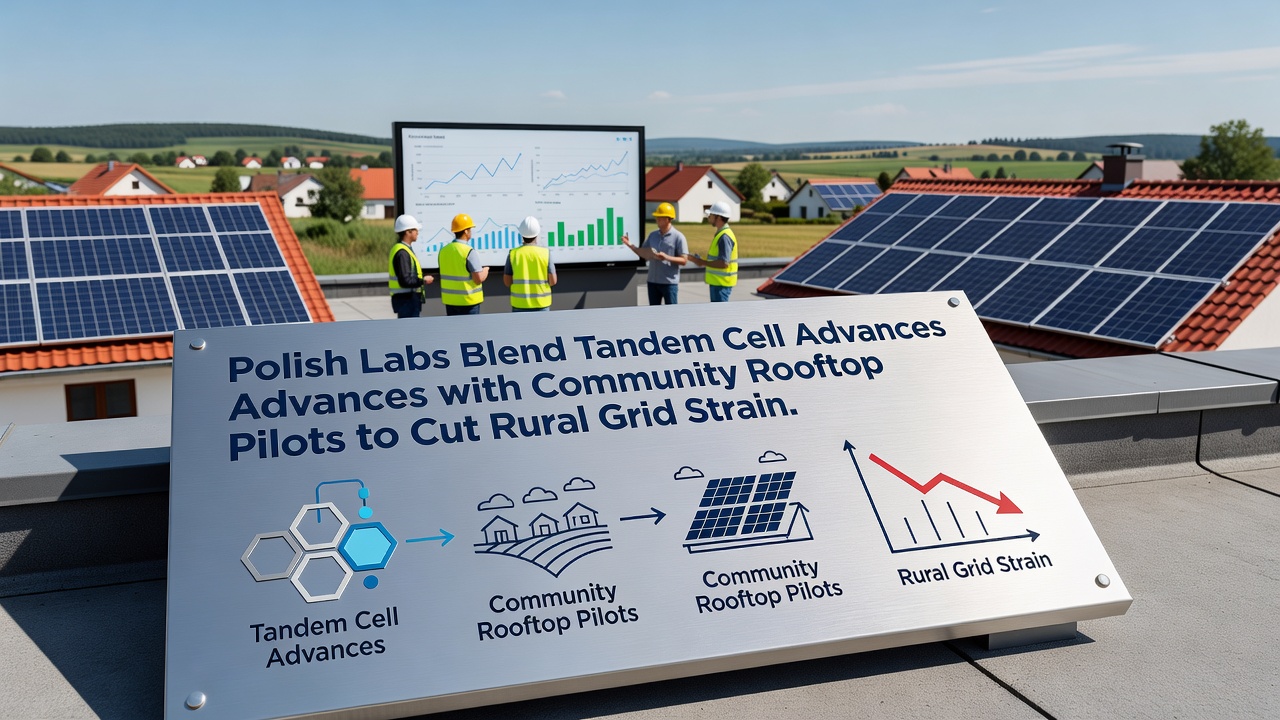
Polish research centers have started combining tandem photovoltaic cell improvements with coordinated rooftop pilot installations in several rural districts, and data collected since early 2025 shows measurable reductions in peak demand on local distribution lines. Engineers at multiple institutions report that perovskite-silicon tandem modules now achieve conversion efficiencies above 28 percent under standard test conditions, while field deployments in community settings provide real-world performance metrics that laboratory results alone cannot supply.
Technical Foundations of Tandem Cell Deployment
Teams working on tandem architectures have refined layer deposition techniques that allow stable operation across temperature swings common in Polish winters, and these adjustments have extended module lifetimes in pilot arrays to more than 25 years according to accelerated aging tests conducted at Warsaw technical facilities. Rural communities participating in the programs install the modules on agricultural buildings and small commercial structures, creating distributed generation points that feed directly into medium-voltage feeders rather than requiring new transmission infrastructure.
Performance monitoring equipment records output every fifteen minutes, and early October 2026 datasets indicate that midday peaks on participating feeders dropped by 18 to 22 percent compared with the same period in 2024. Grid operators note that these reductions occur because tandem cells maintain higher output during low-light hours typical of autumn, smoothing the daily load curve that previously strained aging transformers in villages.
Community Rooftop Pilot Structure and Participation
Local cooperatives select rooftops based on structural assessments and proximity to existing distribution transformers, then coordinate installation schedules with regional utilities so that inverters can be tuned to provide reactive power support when needed. One cooperative in the Podlaskie region connected 47 buildings within a single 8-kilometer radius, and the aggregated capacity reached 1.4 megawatts by the end of summer 2026.
Participation agreements specify that excess generation credits apply first to local consumption before any export occurs, and billing systems track these flows through smart meters supplied by the distribution company. Researchers from the coordinating labs visit sites quarterly to calibrate sensors and verify that tandem module degradation rates remain below 0.4 percent annually under actual operating conditions.
Grid Impact Measurements and Modeling Updates
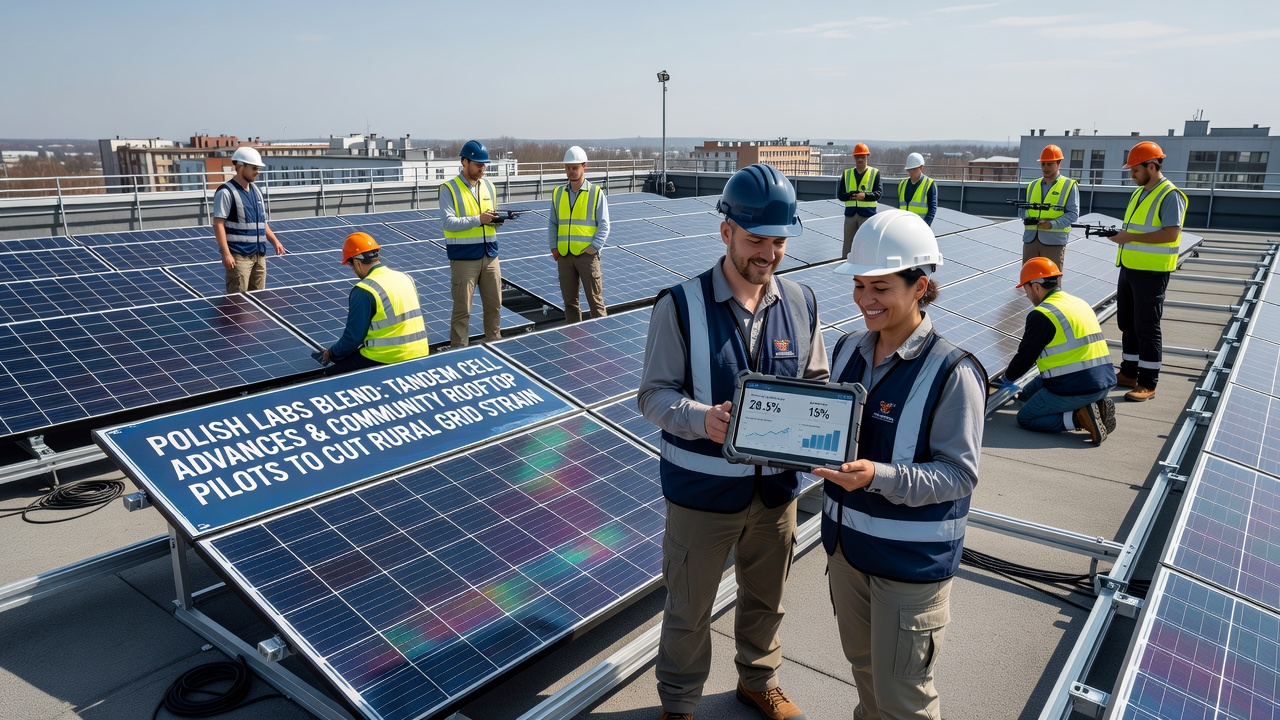
Distribution system studies updated in September 2026 incorporate the new generation profiles and forecast that voltage violations on rural lines will fall by at least 30 percent once 12 additional pilot clusters reach full operation. The models also project that transformer loading will stay within design limits during winter heating seasons when electric heat pumps begin to appear in the same communities.
International comparisons appear in a recent International Energy Agency report that places the Polish tandem-plus-rooftop approach alongside similar distributed-generation efforts in Canada and Australia, noting that the European projects benefit from denser building clusters that allow shorter interconnection distances. A separate analysis from the National Renewable Energy Laboratory highlights how tandem cell temperature coefficients measured in Polish field conditions align closely with predictions derived from accelerated testing protocols.
Data Sharing adn Ongoing Adjustments
Project teams publish anonymized performance files on a quarterly schedule so that other regions can adapt siting algorithms and inverter settings without duplicating sensor installations. These datasets include irradiance, module temperature, and inverter efficiency values recorded at one-minute intervals during representative weeks each season.
Adjustments to maximum power point tracking algorithms have already raised average daily yields by 3 percent in the second year of operation, and further refinements scheduled for 2027 target spectral response during overcast periods that dominate the Polish climate from November through February. Communities receive summary dashboards that display generation against local consumption, helping residents understand how tandem modules interact with existing consumption patterns.
Conclusion
Polish laboratories continue to refine tandem cell fabrication while expanding the number of rural rooftop sites integrated into the monitoring network, and October 2026 marks the point at which cumulative generation from all active pilots surpassed 4 gigawatt-hours. The combination of laboratory efficiency gains and field-validated grid relief data supplies a replicable template that other distribution regions can evaluate using the same performance metrics and interconnection guidelines already established.