Ines Long · 2 September 2026
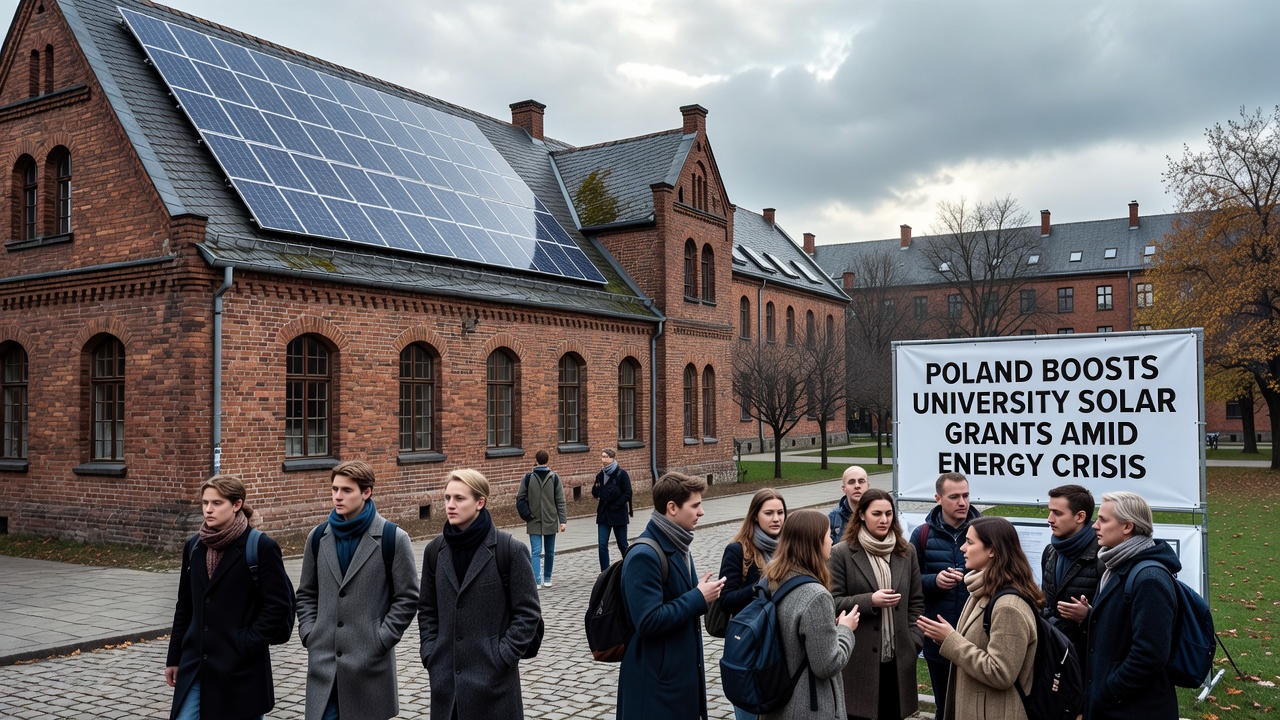
The Polish government has announced an expansion of solar energy research grants for universities as the country grapples with an energy crisis driven by geopolitical tensions and volatile fossil fuel markets. This funding increase targets academic institutions to advance photovoltaic technologies and improve renewable integration into the national power system.
Officials emphasize that the initiative supports Poland's broader shift toward diversified energy sources while addressing immediate supply concerns. Universities across the country are expected to lead projects that enhance solar efficiency and develop storage solutions suited to local conditions.
Funding Allocation and Research Priorities
The Ministry of Climate and Environment has directed an extra 150 million PLN toward solar research programs at institutions including the AGH University of Science and Technology and Wrocław University of Science and Technology. These grants will support investigations into perovskite-based cells, bifacial panel performance, and grid-compatible battery systems. Pilot installations are planned for both urban rooftops and rural microgrid setups, with industry collaborations required to move laboratory results toward commercial use. Additional emphasis is placed on modeling solar output under Poland's variable weather patterns to ensure reliable data for future deployments.
Training components within the grants will prepare graduate students for careers in renewable engineering, aiming to build domestic expertise and reduce dependence on foreign technology imports. Monitoring protocols will track project milestones over the next three years.
Implications for Energy Independence
By prioritizing university research, Poland seeks to accelerate progress toward European Union renewable targets and decrease coal and gas consumption. Analysts indicate that successful outcomes could lower installation costs and support wider adoption among households and small enterprises. The program also facilitates partnerships with international research bodies to incorporate proven methods from other regions. Long-term benefits include strengthened energy security and growth in the domestic clean technology sector, aligning academic efforts with national policy goals during a period of heightened uncertainty.