Ines Long · 2 September 2026
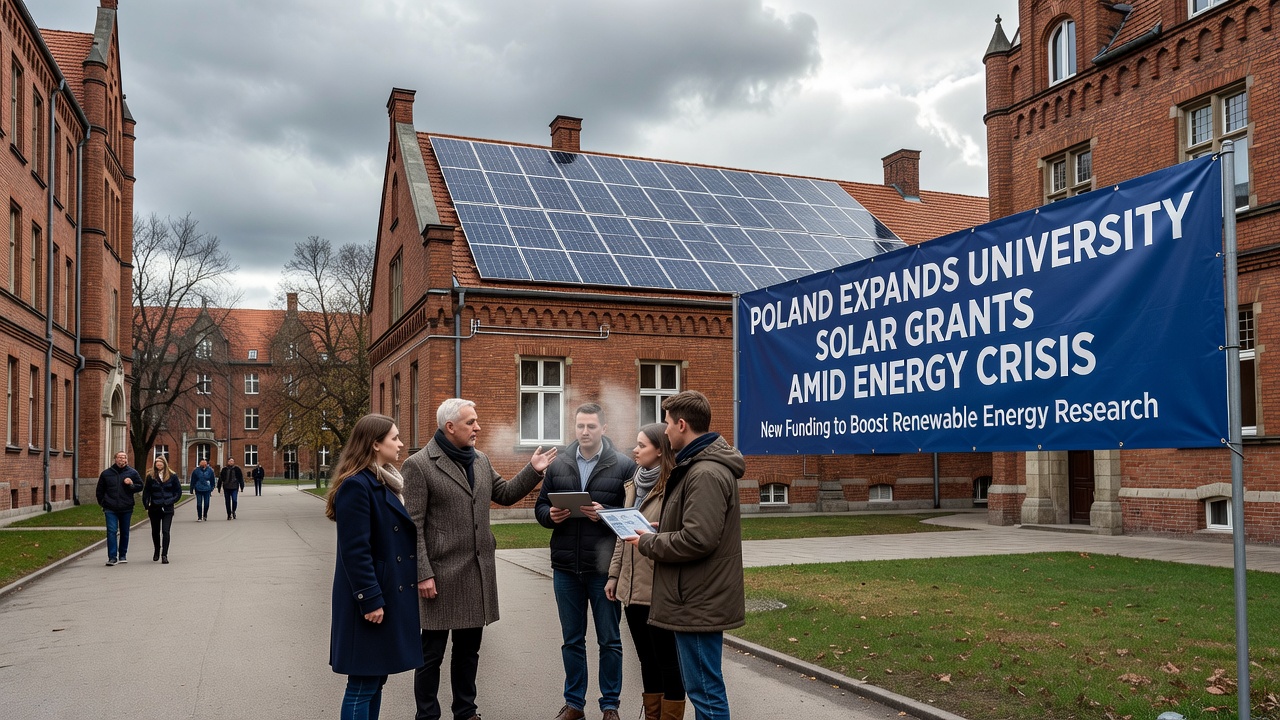
Poland has announced an expansion of solar energy grants targeted at universities as the country grapples with an ongoing energy crisis. The initiative aims to boost research and development in renewable technologies to reduce dependence on traditional energy sources. This move is seen as a strategic response to rising energy demands and fluctuating fossil fuel markets.
Expansion of Funding Opportunities
The new program will allocate additional funds to institutions like the Warsaw University of Technology and the AGH University of Science and Technology in Krakow. These grants will support projects focused on improving solar panel efficiency and integrating solar systems into the national grid. Officials expect that over 50 research teams will benefit from the increased budget, which totals 200 million zlotys for the next fiscal year. Researchers will explore advanced materials for photovoltaic cells and smart grid solutions. This comes at a critical time when energy prices have surged due to geopolitical tensions and supply chain disruptions. Additional resources will be directed toward experimental solar farms on university campuses to test real-world performance.
Collaborations between academia and industry are encouraged under the grants, fostering innovation in solar storage technologies. Universities will also receive support for training programs to develop a skilled workforce in the solar sector. Partnerships with private companies are expected to accelerate the commercialization of new technologies.
Addressing the National Energy Challenges
The energy crisis has led to higher electricity costs and concerns over energy security across Poland. By investing in university-led solar research, the government hopes to accelerate the transition to clean energy. Experts believe this could help meet EU renewable targets and lower carbon emissions significantly by 2030. The Ministry of Climate and Environment has emphasized that these measures are part of a broader strategy to enhance Poland's energy independence. Initial results from pilot projects show promising improvements in solar output during winter months, which is vital for Poland's climate. Continued funding is expected to yield practical applications that can be scaled nationally. Long-term benefits include job creation in the green energy sector and reduced reliance on imported energy resources.